

Posts From Plot 9 - Spring and Strawbs

Updated: Apr 23
April has come (and almost gone) and the soil is getting warmer and ready for planting. There are always things to do on the plot, and I am glad that I took the time at the end of last year’s growing season to cut back a lot of things like the blackcurrants so that I don’t have to do that in the wild days of early spring. I’m also glad that I chose to tarpaulin sections of my plot because that held back the weeds and gave the soil a few extra degrees warmth ready for the tatties going in last week.
This weekend I took time to tidy up my strawberry patch. I am a very keen strawberry grower and very proud of them every year. I am a bit late tidying them up this year, but I was putting it off waiting for better weather and then just had to face getting on with it between showers. I have had my strawberry patch for eight years now and I went from year one with 3 (yes, just 3) strawberries to a regular yield of around 20 – 25kg a year. That hasn’t come by accident because I have taken the time to work out what strawberries need to give me that much fruit and here are some tips that I have learned along the way, or been taught by much wiser allotmenteers!

First up – varieties. The two most common strawberry plant varieties sold in nurseries and supermarkets are Cambridge and Elsanta. Cambridge are a “mid season” variety and they have lovely sweet fruit that comes in around the middle of the summer around June to July. Elsanta is also a “mid season” variety but with larger fruit. I have grown these two together since 2018 and they have now cross-pollinated to make a hybrid variety that has Elsanta’s larger fruit with Cambridge’s sweetness and heavy cropping. It was well worth the time and effort.
Strawberry plants really only give their best fruit in their second and third year of being established plants so don’t chuck everything out that first year and start over just because you didn’t get much in year one. Be patient and manage your expectations for your first year, or get some second year plants from someone you know.
When you do have an established strawberry patch you should always be keeping an eye on those babies they throw out as “runners”. These are the long rooted lines that will reach out from your strawberry plants that will establish new plants away from the parent ones. These are literally clones of the parent plant. When you are harvesting fruit make a note of which plants are giving the most flavourful fruit and the highest yield and pop a little flag in. This is the plant you will want to collect the runners from. If a strawberry plant offers no fruit, you should take it out – bin it- and don’t save any runners from it. Eventually, by a process of elimination over a few years, all of your plants will be good ones that are therefore producing good runners.
What to do with these runners? Keep a good supply of pots and when you see a good plant throwing out runners you can just pop a pot of soil under it and let the baby plant establish itself there. Then you can move it and build up a new bed and have a nursery of these baby plants to replace old ones that you take out.
As I mentioned before, strawberry plants really give their best fruit in their second and third year. This year my strawberry bed had around 60 % of the plants being in their fourth year so I cleared the bed completely and moved it to another location on the plot. This new bed has been manured over winter and is now replanted with strawberries in their second year. These came from my nursery patch, and I hope they will grow quickly and I should have another good year of large and sweet strawbs.
Another good tip is to be careful with your netting during flowering season. Rookie mistake is to over-net your strawbs with net that is too tight for pollinators to get through. I did this my first year - lesson learned! Your net has to have a nice open-weave so that the bees and other pollinators can get in and out without harm. I also like to make sure that it is not so tight that it traps birds and I check it daily when the flowers turn to fruite so if any birds do get in I can safely release them. Yes, I lose some fruit to the mousies with a looser net but that’s a given and I can spare some.
The old strawberry bed has been working so hard for a few years that it now needs a rest, and I will clear it back and manure it well before anything else goes in there.

The strawberry bed has been my work for most of the weekend and it’s messy and hard on the back, so it has been lovely seeing the daffodil bed throwing some colour on the plot while I work. I grow these just for fun and for taking a vaseful home. It’s so nice having some colour around the place to cheer things up when I’m getting muddy and diving for cover from random downpours.
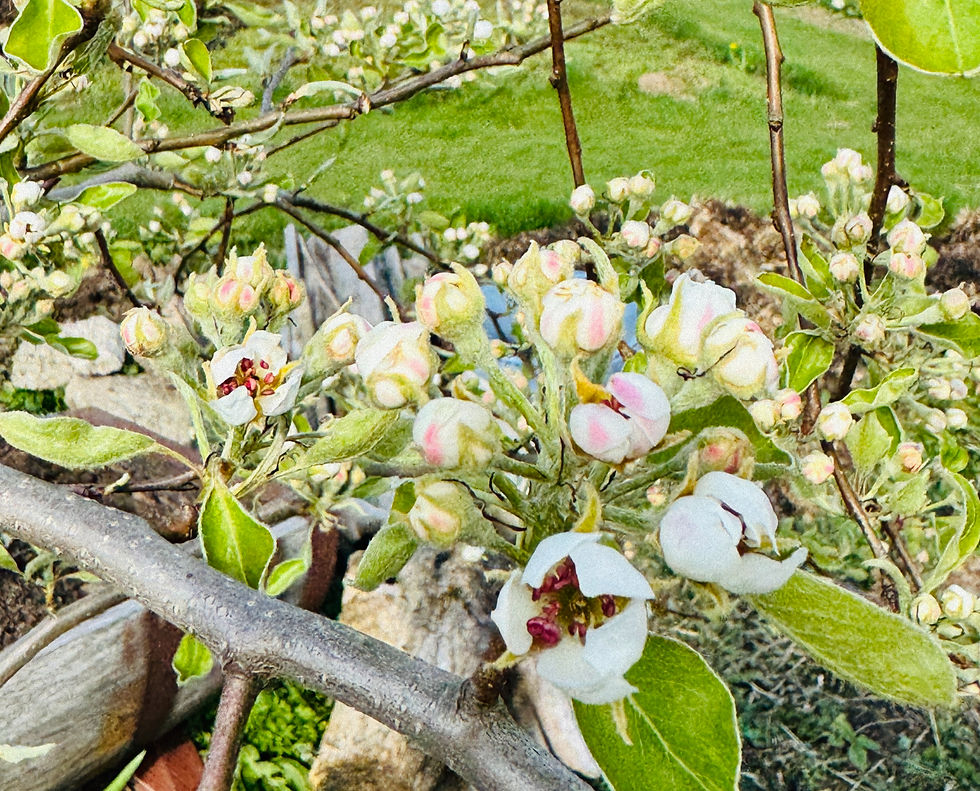
In other news from Plot 9 the dwarf pears are absolutely covered in blossom that is just about to burst open so I’m hopeful for a decent pear year. Pears have struggled for the last few years so (fingers crossed) I might actually get some fruit this year.
I’ve also planted out some black carrots and black lettuce varieties in my raised beds so watch this space to see if they come to anything. I like to plant some unusual varieties every year and this year I have some very odd things on the go and I’ve no idea if they will work!
More updates soon!
Happy growing
Dawn

Comments